
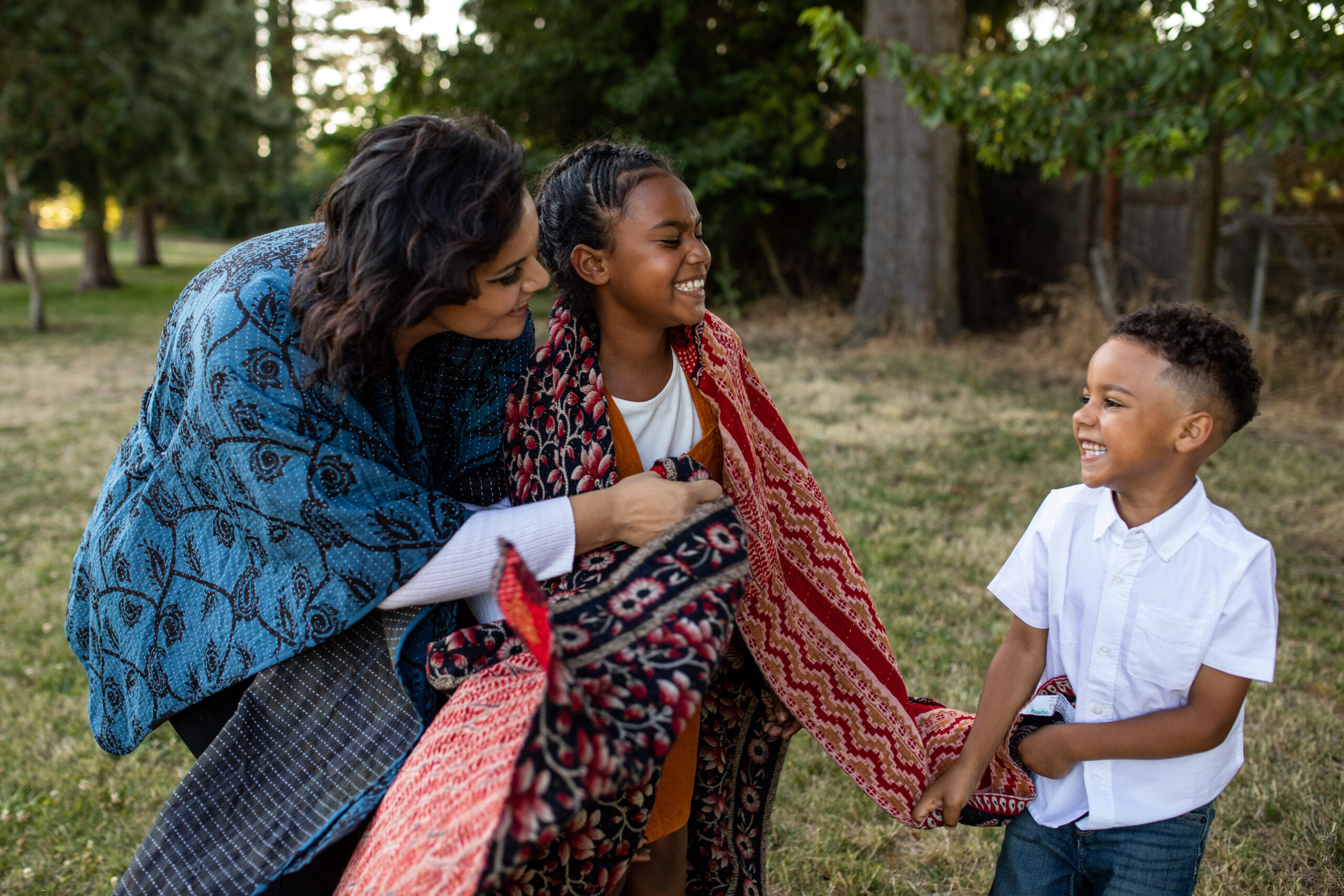
The sari is traditional attire that can be seen in Bangladesh, India, Pakistan, Nepal and Sri Lanka. It dates way back… with sari-like drapery seen in ancient India as far back as 2800–1800 BCE! The sari can range from 4-1/2 to 9 yards long and 24-47 inches wide. The yardage is wrapped around an under skirt and around a blouse, with a piece hanging off the shoulder which can be wrapped around your shoulders or head.
Traditionally, married women always wore saris. Gradually, the salwar kameez has become more commonly worn, but you can still spot many women cooking for their family, carrying water, building roads, selling or shopping in the marketplace, tending to livestock… all wearing saris.
Of course there are luxurious saris as well, and every woman in Bangladesh has a treasured stash of gorgeous saris with intricate borders, rich colors, and luxurious cloth. It doesn’t matter how many saris a woman has… a sari is always the perfect gift.
For centuries, women have taken saris that had been worn past their prime and repurposed them into blankets for the home. A new baby will be welcomed with a pile of fresh handmade kantha blankets that are small and serve as baby mats, as warmth, as cleaning materials, as diapers. Women would also embroider cultural motifs, events, and everyday moments in an elaborate technique called Nakshi Kantha.
 But it’s the everyday kantha that has always inspired us at Basha. The cotton saris are incredibly soft and cozy. The colors and patterns will cheer up any drab day. Hang them on the backs of chairs to add color and to be readily available to chase away the chill. Put them on your bed – we have every size! Some people hang them on the wall, creating instant art.
Basha uses an average of 465 used saris per month for our products. That keeps them out of landfills and trash cans, but it also gives new life to the stories the sari already held. The cotton, brightly patterned saris tell the stories of women caring for their family day in and day out, as the cloth changes from starched stiffness to soft and pliable. And I’ll let you in on a little secret. Even if you have a product made from new cloth, this vintage cloth is still often used for inside layers.
As a social enterprise where women work to build new lives for themselves, the metaphor is not lost on us. Our artisans take discarded cloth and transform it into blankets and products that are cherished and loved all over the world. Through this work, they are also transforming their lives, the lives of their children, and future generations.
With every story you create with your Basha product, there are more stories layered behind it: lives lived in the sari cloth, hands taking discarded cloth and creating beauty, lives discarded given a new future through their artistry.
See examples of sari’s being transformed in this youtube short and instagram post.